
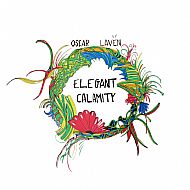
Oscar Lavën, Elegant Calamity (Thick Records NZ)
It must have been quite a night when New Zealand saxophone star Oscar Lavën brought his Elegant Calamity Orchestra into Wellington’s intimate Bedlam & Squalor venue to record this exuberant, exhilarating music.
Although he concentrates on tenor saxophone here, Lavën is adept across the whole woodwind family and just as likely to be found performing Vivaldi and Telemann on bassoon as he is playing jazz of all suits from New Orleans-style through to big band, bebop and beyond.
The make-up of his orchestra reflects his wide range of work, with strings joining reeds, brass and a five-piece rhythm section, and the musicians are encouraged to express themselves in an ensemble sound that can slip easily from the rambunctious to the romantic.
The opening Trong Park begins with a foghorn-like blast before breaking into a grooving rhythmical canter that supports and drives a big brassy melody. Solos of fire and creativity on trumpet, tenor, piano, trumpet and percussion set the standard for the remainder of the album. Then, following a second track that draws joyous inspiration from Dizzy Gillespie’s Afro-Cuban adventures, the lovely tango-flavoured Butterfly, which was composed by Lavën’s mum, offers gorgeous melodic reflection.
Lavën himself introduces the energetic African groove of Pharoah Blue with a throaty, virtuosic improvisation that hints at tenor titan Pharoah Sanders and there’s something of Duke Ellington’s East St Louis Toodle-oo in Tall Poppy Stomp with its wah-wah trumpet and richly voiced reeds. While these influences and others – Charles Mingus could be the orchestra’s guiding spirit – pertain, there’s also much that bears Lavën’s own maverick stamp. Like its predecessor, Questions In Red, which featured Lavën in quintet mode, this is an effusive endorsement of New Zealand’s music scene.
From The List, February 2026
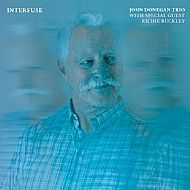
John Donegan Trio, Interfuse (Jayde Records)
The “with special guest Richie Buckley” subtitle confirms that Irish pianist John Donegan was pleasantly diverted from this album’s initial purpose. Following an enthusiastically received run of albums with his two sextets – one London-based, the other representing all corners of Ireland – Donegan decided to revisit his first inspiration, the piano trio.
Bill Evans, Thelonious Monk and Keith Jarrett’s trios are among Donegan’s influences, and you can hear these heroes in the music here. While recording with his Irish sextet, which includes Buckley in the front line, however, Donegan was drawn to continuing the musical conversations he and the saxophonist had enjoyed.
So, the opening Blues Jive, with its Monk-ish edge and appealing descending progression, is the first of a notably rewarding series of three quartet pieces here that showcase Buckley’s wonderful fluency and superb solo building on tenor saxophone. There’s also a soprano saxophone-piano duet, A Resolute Rose, that points to the qualities Donegan admires in Buckley’s more lyrical side.
Donegan’s granddaughter, who survived a serious illness in infancy, is the Rose of the title and the two musicians pay soulful, deeply felt tribute to her.
Elsewhere the mood is buoyant. Donegan, bassist Bernard O’Neill and drummer John Daly swing A Kite for Kate in joyful up-tempo waltz time. Rumba De Ciudad features the trio in Cuban dance mode and Donegan in the same effusive, expansive form that he brings to the lovely solo piano interlude, Song for Ciara with its definite song-like construction.
From The List, December 2025.
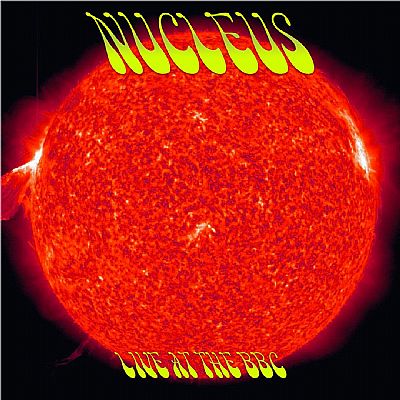
Nucleus, Live at the BBC (Repertoire)
Dave Pegg, the bass guitarist with Fairport Convention, once likened the band’s manifold personnel changes to staff turnover in an office. Twenty-six arrivals and departures in twenty-five years (at the time), the man they call Peggy reckoned, wouldn’t have been such a big deal to the average HR department.
Trumpeter, composer and author Ian Carr could have used a similar comparison for his band, Nucleus, although it wouldn’t be every office that saw a future knight of the realm, one of the Wombles, the bassist with the Eurythmics and the saxophone player in the Strictly Come Dancing house band come and go. more
Dutch drummer Joost Lijbaart has spent much of the unexpected free time afforded by the COVID-19 pandemic fulfilling a long-held ambition, making a solo album on which he plays all the instruments.
It’s a form of painting with sounds in some ways, as gongs, bells, shakers and whistles create an impression of flora and fauna, but there’s also a spiritual aspect to the music. more
Danish-Vietnamese pianist Niels Lan Doky first appeared on UK jazz listeners’ radar in an international quartet of Berklee music students with the, at the time, seventeen-year-old Scottish saxophonist Tommy Smith, in 1984.
Lan Doky was a little older, around twenty-one, but it was no surprise that he went on to work with the distinguished list of musicians cited in the accompanying press release, which begins with Joe Henderson, Woody Shaw, Al Foster, Michael Brecker, David Sanborn, Gary Peacock, Jack DeJohnette, and Ray Brown, and continues at considerable length. more
Dutch saxophonist Yuri Honing emerged in the mid-1990s with a trio that earned a following, in Scotland certainly, for its wry, often subtly-camouflaged readings of pop songs by Abba, Blondie, The Police and others, which they weaved into similarly spacious original compositions and offbeat standards. more
From London Jazz News, May 15, 2020
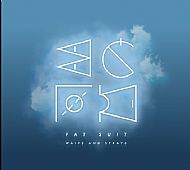
With delegates and programmers from the UK and Ireland-wide Jazz Promotion Network’s annual conference present and open to being impressed, Glasgow Jazz Festival offered three of Scotland’s leading young bands a platform in its flagship venue on Thursday. The results from this exposure will take some time to filter through and the concert’s reach will be increased when it is broadcast on BBC Radio 3’s J to Z programme on Saturday, July 6 but audience response on the night was overwhelmingly, and rightly, positive.
A septet led by bass guitarist David Bowden and drawing on South American and African influences, Mezcla set a high standard with assured musicianship, a superbly grooving rhythm section and easily appreciated tunes. The frontline of tenor saxophone and trumpet offered tightly executed horn lines and creative improvisations while guitar and keyboards added West African flavours and penetrating invention and the understanding between drummer Stephen Henderson and percussionist Steve Forman consistently impressed with colour, variety and judicious punch.
In contrast to this relaxed mastery, drummer Graham Costello’s STRATA produced an intense, hypnotic and almost continuous journey through mesmerising, repetitive motifs, crisply and carefully executed sound worlds, variously virtuosic and hungry, elemental soloing, and frankly thrilling musical peaks. Pianist Fergus McCreadie’s investigation of the instrument’s inner workings and edgy, itchy-fingered keyboard explorations were riveting but the whole band, also featuring Joe Williamson (guitar), Mark Hendry (bass) and the marvellously unruly yet apposite saxophonist Harry Weir, played with the command that comes from Costello’s dedicated, artful work ethic. A fantastic set.
A year or two more experienced as a band and with a fourth album iminent, the mighty Fat-Suit continue to excite with their jazz sophistication, rock attack, intricate riffing, occasional interludes of Scottish, fiddle-led pastoralism and full-on, brass-punctuated sound. Theirs is a story that has involved dozens of musicians. Some twenty-seven featured on their most recent album, Atlas. So, this ten-piece edition was Fat-Suit streamlined, but in no way reduced, and giving individual showcases, notably to keyboardist Alan Benzie, among an ultra-skilful orchestral panorama.
From The Times, June 22, 2019
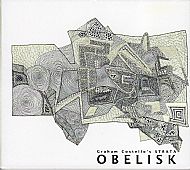
Drummer Graham Costello’s STRATA is a collective with strong connections to the jazz course at the Royal Conservatoire of Scotland but is reaching out to audiences of many persuasions with its confident, superbly well-rehearsed ensemble work ... more
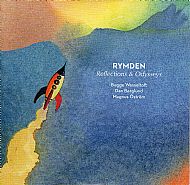
Rymden, Reflections & Odysseys (Jazzland)
There’s something entirely natural, if not even inevitable, about Scandinavian trio Rymden forming. Comprising the bassist, Dan Berglund, and the drummer, Magnus Ostrom, from world-conquering Swedish jazz trio EST and that group’s fellow Nordic pioneer, pianist Bugge Wesseltoft, Rymden not only reunites Berglund and Ostrom, who have been leading their own projects since EST’s guiding spirit, Esbjorn Svensson’s untimely death in 2008, it brings them back to the piano trio format.
Wesseltoft’s New Conception of Jazz was a success in parallel with EST and although he has his own character as a musician, there are elements here that continue EST’s work as well as others that showcase his energetic approach to both acoustic piano and the electric Rhodes model.
Berglund and Ostrom blossomed as composers following EST’s demise. This adds to Rymden’s possibilities, with the former’s Pitter-Patter laying down a bouncy groove and the latter’s Bergen developing bright bells-like arpeggios with typically precise, determined drumming. Wesseltoft’s Rak introduces dark menace before dancing off on a Rhodes riff powered by Ostrom’s splashy exuberance and the final Homegrown, very much in the hymn with no words style, is beautifully understated, encouraging thoughts of more still to come.
From The Herald, March 9, 2019
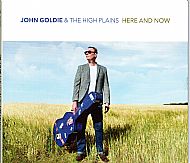
John Goldie & the High Plains, Here and Now (own label)
Lanarkshire-based acoustic guitarist John Goldie travels the world giving solo concerts that showcase his remarkable ability to sound like at least three musicians playing simultaneously. Here, though, there’s no illusion as Goldie’s strong, clear guitar picking is accompanied by a string quartet that matches his robust energy and soulful, sensitive melodic playing to order.
Stylistically varied, Goldie’s compositions straddle the worlds of folk, country, bluegrass and swing, with the opening Too Close to the Campfire sounding as if said campfire could be in a Scottish glen or up a Tennessee creek.
Violinist Seonaid Aitken, who has written the string arrangements, goes toe to toe with Goldie, trading choruses on the fingerbustin’ hoe down of Line Trance, and sets a cracking pace for Goldie to follow on Queens Park Trot’s gypsy jazz twang.
Those Who Fell is more reflective, suggesting a Jewish influence. The charming Downward Spiral evokes a slightly olde worlde grandeur and Flyin’ Scotsman hints at the heavy metal riffing that Goldie enjoyed in his youth. The musicianship is of a consistently high quality, with JJ Gilmour adding a gruff but tender vocal cameo on the closing title track.
From The Herald, January 12, 2019
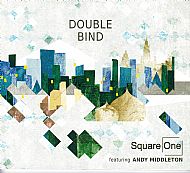
Square One featuring Andy Middleton, Double Bind (Square One)
Back in March, American saxophonist Andy Middleton joined Glasgow-based quartet Square One for a series of concerts around Scotland and two days of recording.
This fine CD is the result, nine tracks – five by Middleton, one by each Square One musician – that reveal interesting contrasts in compositional style and yet have the unified feel of a long-established partnership.
Middleton has worked with jazz luminaries including Maria Schneider, Billy Hart and Randy Brecker and everyone in Square One is a bandleader in his own right, as well as all being a crucial contributor to the bands that define the Scottish scene’s current strength. So the quality of musicianship is a given, with pianist Peter Johnstone consistently delivering solos that show why he’s such an asset to Tommy Smith’s ‘Coltrane’ quartet and drummer Stephen Henderson playing with unfailing certainty and direction.
If bassist David Bowden’s ballad, Winter Walk is a lesson in restraint, then Johnstone’s intricate, Macedonian-sounding Into the Orient is jubilation incarnate. Middleton, Wayne Shorter-like on soprano, and guitarist Joe Williamson display a great understanding, not least on the concluding City of Spies with its fitting air of espionage and dark menace.
From The Herald, December 15, 2018
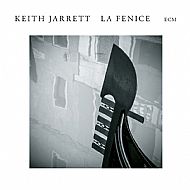
Keith Jarrett, La Fenice (ECM)
Gilbert & Sullivan might not be an obvious source of inspiration for Keith Jarrett’s particular form of piano inquiry but The Sun Whose Rays, from The Mikado, fits entirely naturally into this solo concert, recorded in Venice in 2006 but released here for the first time.
By the time Jarrett sat down to play at the Grand Theatre of the Phoenix, to give La Fenice its full English translation, he had been making solo, largely improvised recordings with ECM for thirty-five years. Yet it can still come as a surprise to hear how fully-formed and song-like his spontaneous compositions can be.
Captured over two CDs his eight ‘in the moment’ creations include one that could be the complete backing track for a Randy Newman song and another that might have formed the guide arrangement for one of Jarrett’s Scandinavian Quartet’s gospel inflected groovers from the 1970s.
That special group, which briefly created some of Jarrett’s best-ever ensemble work, might have been on his mind here as, following favourite standards My Wild Irish Rose and Stella By Starlight, he encores with a deliciously tender Blossom from the quartet’s classic 1974 album, Belonging, an extra that’s worth the entrance fee all by itself.
From The Herald, December 17, 2018
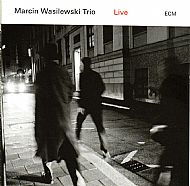
Marcin Wasilewski Trio, Live (ECM)
Tomasz Stanko’s recent death adds poignancy to this latest release by the group the Polish trumpeter adopted as his rhythm section from 2001 to 2005. By the time Stanko brought them onto the international stage, pianist Marcin Wasilewski, bassist Slawomir Kurkiewicz and drummer Michal Miskiewicz had already been a working unit for eight years, although they were only in their mid-twenties, and their continued work together pays dividends still as they listen to and support each other’s creative impulses.
This set was recorded within days of their most recent appearance in Scotland, in 2016, and it’s a treat to be taken back to that night when they drew as much inspiration from the Police’s Message in a Bottle as from a more conventional jazz item, Herbie Hancock’s thrillingly dramatic Actual Proof. These and Wasilewski’s Night Train to You show them at their most dynamic, with the last named piece’s springy groove propelling the pianist to marvellously exultant improvising.
Wasilewski has a beautiful touch. Opening track, Spark of Life captures his pearly phrasing and talent for creating atmosphere and moods and Three Reflections, with Miskiewicz at his most subtly urging, is a model of quiet collective brilliance.
From The Herald, October 6, 2018
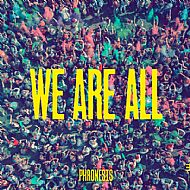
Phronesis, We Are All (Edition)
With their eighth album, the Scandinavian-English combo Phronesis re-confirm their status as one of the most consistently creative piano trios in world jazz and show that, after thirteen years together, they are still moving forward and searching out new ways of presenting music in one of the most prevalent of instrumental jazz formats.
All three musicians contribute to the writing, and in separate projects each has presented a strong individual composing style, yet there’s a very definite Phronesis sound in all six of these tracks as they merge classical influences, restlessly tease out musical detail, play with fidgety energy or just groove with a relaxed fluency.
The precise punctuation on the opening One for Us is classic Phronesis, as are the interplay between Ivo Neame’s urgent piano, Jasper Hoiby’s vaulting basslines and Anton Eger’s bright, crackling drumming and cymbal clarity, and the dark menace of Emerald Horsehoe and the ominous, bowed bass and keyboard moodiness of The Edge contrast superbly with Breathless’s optimistic flow.
The Tree Did Not Die, with its morse code-like ostinato and shaded electronica, emphasizes the trio’s constant quest for new sounds and points towards the next chapter in a fascinating story.
From The Herald, September 21, 2018
Scottish National Jazz Orchestra: Jazz Re-Imagined, Queen’s Hall, Edinburgh
For its penultimate project of 2018 the SNJO turned the focus on the art of arrangement with one of the orchestra’s most frequent collaborators, Florian Ross. The Cologne-based pianist and composer’s assignments have included re-orchestrating the great Scottish tenor saxophonist, Bobby Wellins’ previously neglected Culloden Moor Suite, the haunting epilogue of which featured here, and one of his particular talents lies in finding new angles from which to view familiar pieces.
Thus John Coltrane’s Giant Steps became less of the test piece for saxophonists to show their skill in negotiating its ferociously intricate contours in its popular guise, although SNJO director Tommy Smith, as the evening’s main featured soloist demonstrated skills aplenty, and was transformed into something more benign and considered with rich orchestral colour.
Ross likes to incorporate other pieces into the work at hand - Charlie Parker’s Constellation was woven beautifully into another Parker favourite, Yardbird Suite, and I thought I detected elements of Cheek to Cheek in Giant Steps – and his own compositions such as Ramblin’ can gather quite different styles into a unified structure.
He used the orchestra well but then he did have at his disposal an ensemble that combines into one big instrument. The section work, where lines were passed from saxophones, sometimes bolstered by both baritone and tuba, to trumpets and trombones was typically superb and the broad variety of moods, as exemplified by West Side Story ranging from street wisdom to lush romance, was articulated with mastery. Outstanding individual playing came from drummer Alyn Cosker and Martin Kershaw, capturing Wayne Shorter’s soprano personality on Nefertiti, but this was essentially a team success.
From The Herald, September 13, 2018
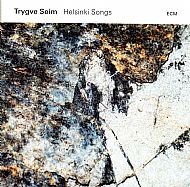
Trygve Seim, Helsinki Songs (ECM)
Like his older fellow countryman, Jan Garbarek, the Norwegian saxophonist Trygve Seim has a distinctive, instantly recognisable sound.
Since making an immediate impact with his award-winning ECM debut as a bandleader, Different Rivers in 2001, Seim has tended to shy away from the standard jazz quartet. He has found one to work with here, however, and in the Estonian pianist Kristjan Randalu in particular he has introduced his followers to a special talent.
Randalu’s always melodic, ever exploring style is a delight, especially on the dancing Randalusian Folk Song, where the Finnish drummer Markku Ounaskari also opens up, and on this and several other tracks the group, without following it slavishly, calls to mind Keith Jarrett’s Scandinavian quartet, with bassist Mats Eilertsen anchoring the sound perfectly.
The gently rocking Helsinki Song and the plaintive Sorrow March, with their processional qualities, might have come from Seim’s glorious, larger scale Sangam project, and while the latter track initially lives up to its title, there’s a real uplift in its resolution. Seim cites influences and inspirations from Igor Stravinsky and Coco Chanel to Ornette Coleman and Jimmy Webb here but the net result is very much his own.
From The Herald, September 8, 2018
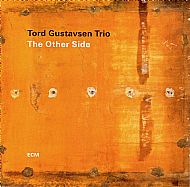
Tord Gustavsen Trio, The Other Side (ECM)
Those already anticipating his sole Scottish autumn date in Helensburgh in October will have noted Tord Gustavsen’s return to the piano-bass-drums format which established the Norwegian as one of Europe’s new jazz stars in the early noughties.
Following the tragically early death of his bassist, Harald Johnsen in 2007, the pianist moved on to larger ensembles and work with singers rather than continue the trio. These projects have clearly given him fresh impetus as he sounds reinvigorated, in his calm, distilled ideas way, with new bassist Sigurd Hole’s bowing providing some lovely colouring and long-serving drummer Jarle Vespestad continuing to find spaces to fill with inspired choices and creating quiet grooves when the occasion demands.
Church music remains a major influence on Gustavsen, as does the Norwegian folk tradition, and there are three reworked Bach pieces including Jesu, Meine Freude which bubbles ominously but beautifully as well as one by nineteenth century composer Ludwig Mathias Lindeman that unfolds and flourishes like a traditional ballad. More in keeping with the jazz ballad tradition is Curves, which closes the album with understated loveliness from a unit who are clearly listening to one another intently.
From The Herald, August 25, 2018
Julian Arguelles, Tonadas (Edition)
The one-time East Lothian-based saxophonist Julian Arguelles explores his family’s Spanish roots on this superb collection of compositions enhanced by a trio of musicians who put their imaginations and musical personalities at the service of a genuine group effort.
Since the 1980s, when he was part of the Loose Tubes troupe that energised the London jazz scene, Arguelles has been admired for his often gently persuasive, wispily curling tenor style. To this he adds a more forthright, bullish approach on the opening Alala and on Barrio Gotico he leads the quartet with restless invention and energy.
The influence of flamenco is felt particularly strongly on Bulerias, where Sam Lasserson’s forceful double bass drives the music forward, and on Alegrias, where drummer James Maddren’s brushes and footwork suggest the dancer’s percussive role in duets with Arguelles’s searching soprano and the marvellous Ivo Neame’s inventive pianism.
Tonadas translates simply as tunes and while there’s perhaps some modest understatement in that choice of title, it is also borne out by the sheer joy of melody making in Arguelles’s writing and by the way all four musicians make the music sing tunefully while exercising their collective creative muscle.
From The Herald, August 11, 2018
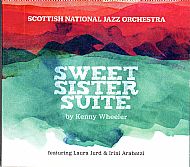
The Scottish National Jazz Orchestra, Sweet Sister Suite (Spartacus)
The Scottish National Jazz Orchestra is making a habit of championing under-sung heroes. Firstly, with its reworking of Bobby Wellins’ long neglected Culloden Moor Suite and now with this piece, which SNJO director Tommy Smith commissioned from the great British-Canadian trumpeter Kenny Wheeler, the orchestra has paid tribute to two musician-composers, neither of whom would have thought about pushing himself to the front of any queues but who both made music of sometimes quiet but marked strength and originality.
Sweet Sister Suite perfectly captures Wheeler’s musical personality. Without trying to sound like their predecessors, featured soloists, trumpeter-flugelhorn player Laura Jurd and vocalist Irini Arabatzi convey the spirit of Wheeler and Norma Winstone while the orchestra reels and roams through variously stormy, hypnotic, swinging and gloriously tumbling passages of beautiful writing.
The lovely, murmuring Keeper of the Light and the gently insistent Worlds Apart grow in assertiveness and inspire fine solos from Smith and pianist Peter Johnstone and there are superb improvisations also from Paul Towndrow (alto), Martin Kershaw (soprano) and Jurd, especially as she trades phrases with guitarist Rob Luft on Wondering Dream. A marvellous addition to SNJO’s growing catalogue.
From The Herald, July 28, 2018
Edinburgh Jazz Festival 40th Anniversary Gala Concert, Assembly Hall, Edinburgh
Edinburgh Jazz Festival caught just the right tone with this celebration of an event that began as a one-day series of pub jazz sessions and has grown into ten days featuring myriad styles of music that liberally interpret the ‘A to Z’ in the middle of the word ‘jazz’ while promoting home-grown talent alongside world class touring attractions.
With due reverence paid to the festival’s founder, Mike Hart, who is currently indisposed, the evening moved on with equal parts quality and jollity. Hosted by Seonaid Aitken, who in recent years has become the voice of jazz in Scotland through both her professional presentation of BBC Radio Scotland’s Jazz Nights programme and her clear, unaffected singing, the running order kept to a tight schedule.
Aitken herself opened the show, singing It’s Alright with Me from her Ella Fitzgerald tribute presentations and introducing her accompanist, pianist Brian Kellock who proceeded to live up to Aitken’s assessment of him playing every style of jazz. First imbuing Aitken’s song with an energetic boogie, Kellock then led his trio, with bassist Kenny Ellis and drummer John Rae, with big swinging momentum, tender-and-then-some ballad interpretation and intricate, right on the edge piano and cymbals interplay.
Kellock’s partnership with saxophonist Tommy Smith next justified Smith’s rating of the pianist as his own personal orchestra. Uncanny anticipation and a kaleidoscopic range of piano tones responded to Smith’s variously assertive, acerbic, softly affecting, beautifully considered and – as on their version of Sweet Georgia Brown – rompingly good natured playing.
Another duo, singer Carol Kidd and pianist Paul Harrison negotiated a fine line between perfection and near-anarchy. Kidd’s diction and tone production on Hoagy Carmichael’s Skylark were fabulous and her refusal to match Harrison’s pre-planned modulation on Just in Time was a feat in itself.
Martin Taylor produced his inimitable solo guitar magic before Aitken’s band, the hot club swing-styled Rose Room featuring guest saxophonist Konrad Wiszniewksi complementing Aitken’s virtuosic violin playing, and an all-star jam on I Got Rhythm sent the audience home satisfied.
From The Times, July 16, 2018
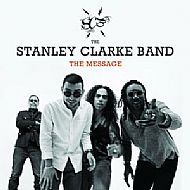
The Stanley Clarke Band, The Message (Mack Avenue)
Bassist Stanley Clarke’s first appearance in Glasgow in many years last summer reminded fans of his own singular talent and introduced them to a trio of young accomplices of conspicuous skill, not the least of them being the brilliant pianist from Tbilisi, Georgia, Beka Gochiashvili.
Barely into his twenties, Gochiashvili thrilled at every opportunity and while Clarke obviously runs the show on an album that covers the bassist’s interests in pop-soul, classical music, rap and the sort of high production sounds that he’s brought to his work in film soundtracks, the pianist’s contributions ring out strongly.
The piano, bass and drums feature Alternative Facts is almost worth the admission by itself, with Gochiashvili playing with energy, quick- thinking creativity and physical joyfulness.
Elsewhere, Clarke demonstrates supple mastery of both electric and acoustic basses on the bass guitar and synth produced title track and his reading of Bach’s Cello Suite 1 (Prelude) on double bass. The quartet that mesmerised Glasgow is both supercharged and augmented on a revisit to Return to Forever’s After the Cosmic Rain and the spirit of Clarke’s late conspirator, George Duke hovers on To Be Alive’s partying, parting groove.
From The Herald, June 23, 2018
Young Scottish Jazz Musician of the Year 2018, Drygate, Glasgow
Twenty-four-year-old guitarist Joe Williamson became the latest winner of the Young Scottish Jazz Musician of the Year title following this keenly but amiably contested final.
A graduate of the Royal Conservatoire of Scotland jazz course, which currently nurtures three of his four fellow finalists, Williamson has already enjoyed success with his band Square One, as winners of the coveted Peter Whittingham Jazz Award in 2015, and his experience in arranging for and working with seasoned professionals – Square One toured earlier this year with American saxophonist Andy Middleton – shone through in his performance here.
Working with the house trio of pianist and Square One colleague Peter Johnstone, bassist Mario Caribe and drummer Alyn Cosker, Williamson fashioned an almost seamless piece of music from the standard I’ll Remember April and his own composition, Morning Star.
He transformed I’ll Remember April into a modern jazz vehicle, from its chordal, folk-rock opening through an assertive statement of the theme, a very effective passage for guitar and piano and into its energetic ensemble coda. Morning Star was similarly multi-phased and allowed Williamson to feature tonal variation, well-crafted phrasing and expressive improvisation.
Back in its original slot on the opening night of Glasgow Jazz Festival, the final was a fine showcase for the young jazz scene that has developed in Glasgow in particular and Scotland in general. Pianist Fergus McCreadie showed real musical personality, evoking the Scottish landscape in his lucidly atmospheric composition The Teacher and bringing fire and virtuosity to his soloing on The Groove Merchant.
In a rare sighting of a singer over the event’s history, Luca Manning delivered This Masquerade is Over with good tone production, clear diction and confident interaction with the trio, and Rise, his own, wordless composition, beginning a cappella, developed a strong momentum.
Saxophonist Matt Carmichael showed good pacing and an ability to marshal ideas well, particularly on his initially tender and ultimately commanding version of Brad Mehldau’s When It Rains, and bassist Conor Murray played with energy and a firm tone across the instrument’s full range.
From The Times, June 22, 2018
Joshua Redman, Still Dreaming (Nonesuch)
On his last visit to Scotland, saxophonist Joshua Redman featured in a sensational partnership with maverick New York combo the Bad Plus. His latest group would be equally welcome.
Working with cornetist Ron Miles, bassist Scott Colley and drummer Brian Blade, Redman invokes the spirit of the band his late father, Dewey featured in during the 1970s and 1980s, Old and New Dreams. And while this is mostly new music, a revisiting of Playing, the title track from Old and New Dreams’ third album, and of both groups’ guiding light, Ornette Coleman’s Comme Il Faut emphasises just how close is their kinship.
The approach is free-spirited but with each player bringing logic, shape, hunger and direction to a style drawn from folk, blues and gospel influences. In taking the Don Cherry role, Miles plays with a great variety of attack, including a lovely muted tone that gives way to a full-blooded cry on Comme Il Faut, and he and Redman’s bluesy commingling makes the ballad Haze and Aspirations all the more affecting. At less than three minutes, It’s Not the Same, propelled by Blade’s glorious bounce, is not alone in leaving the listener wanting more.
From The Herald, June 9, 2018
Sugarwork, Sugarwork (own label)
Paul Harrison is one of the Scottish jazz scene’s most versatile musicians. As a pianist he’s as likely to turn up playing swing classics as he is the music of Brazilian composer Egberto Gismonti and on electronic keyboards he’s equally fascinated by organ grooves and creating new sounds.
It’s in this last endeavour that his group Sugarwork finds him. Joined by three other restless spirits – saxophonist Phil Bancroft, guitarist Graeme Stephen and drummer Stuart Brown – Harrison fashions and manipulates music that’s by turns robust and forthright, gently probing, strongly melodic and intriguingly atmospheric.
The opening Habit Control is a blast of tough directness set against fidgety rhythms and while over its nine companion pieces the boldness ebbs and flows and gives way to tenderness and vulnerability, with beautifully inventive playing from Bancroft and Stephen, the sense of a quest for new things to say and different tones to say them in is ever-present.
Harrison didn’t rush this, the group’s first album and that shows on attention to detail where even the final fade out has imaginative ticks and clicks. Even so, it’ll be fascinating to hear where the next set of adventures takes this intrepid quartet.
From The Herald, May 25, 2018
Fergus McCreadie Trio, Turas (own label)
Citing preeminent pianists McCoy Tyner and Esbjorn Svensson might seem to be placing too much of a burden on a twenty-year-old’s shoulders but these are the names that immediately spring to mind on listening to Fergus McCreadie’s debut.
Opening track The Culearn Mill’s quiet beginnings, although very Scottish sounding, have much of Svensson and his trio’s subtle persuasion and thoughtful attention to detail. Then … crack and we’re into Tyner’s Fly with the Wind, or something very redolent of it, reimagined through the Scottish and European classical traditions.
The effect is exhilarating and typical of McCreadie whose finely tuned group with bassist David Bowden and drummer Stephen Henderson has been wowing audiences with live performances that bristle with collective dynamism and individual prowess that, in their youthful leader’s case, speaks of prodigious, cascading technique while communicating warmth of personality and the ability both to convey a sense of place and landscape and make a melancholy phrase somehow spiritually uplifting.
Turas, which is Gaelic for journey, is jazz with a strong Scottish accent but with all the best ingredients of the American model – including brilliant solo building and touches of church music – well to the fore.
From The Herald, April 28, 2018
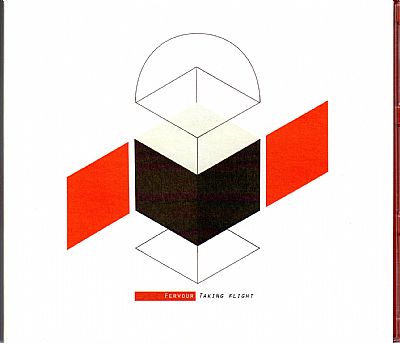
Fervour, Taking Flight (Sean Gibbs)
Edinburgh-born trumpeter Sean Gibbs is probably best known back home for his work with the Scottish National Jazz Orchestra but since going to study at Birmingham Conservatoire and gaining his BMus (hons) he’s made quite an impression as a player, composer and arranger down south.
Following his superb big band album, Burns, Fervour finds the twenty-five- year- old leading a quintet of conspicuous talents on nine original compositions that draw on a wide variety of influences from the New Orleans march-propelled, varied tempo riffing of opening track Go On Then to Spring at Last’s Brazilian flavoured groove and on to the slow, bluesy Adieu that closes the album and showcases both Gibbs’ wah-wah soloing and guitarist Ben Lee’s marvellous high tensile playing.
Gibbs’ music has bags of personality and his soloing is full of ideas, now cool and reflective, now fast and assertive, now downright mischievous. His band go with him all the way and add their own thoughts and commentaries, with pianist Andy Bunting making many telling contributions and Lee a consistently mature presence whose eager trading of phrases with Gibbs on the aptly named, smart, up-tempo Don’t Hold Back is a particular highlight.
From The Herald, April 7, 2018.
Arild Andersen/Paolo Vinaccia/Tommy Smith, In-House Science (ECM)
Norwegian double bass master Arild Andersen’s trio with Oslo-based Italian drummer Paolo Vinaccia and Scottish saxophonist Tommy Smith has been widely acclaimed as one of the best small groups working in jazz today, and this live recording, captured in Bad Ischl, Austria, demonstrates why.
The group tours often and over its ten years together it has developed the kind of understanding that allows free movement between musical styles – from the gospel-like Blussy to the folky Venice to the knotty In House with its tightly articulated collective phrases – while always retaining a strong, immediately recognisable identity.
Quality of sound is important, be it on Andersen’s gorgeous melodic-cum-chordal intro on the opening Mira or North of the North Wind’s haunting electronic atmosphere, but the most striking features here, as on their last Scottish visit, are the contrasts they create and their exhilarating collective energy.
Smith slips between plaintive, soulful vulnerability and raw, angular feistiness. Andersen caresses the strings one moment and takes enthusiastically muscular flight the next and all the while the marvellously resourceful Vinaccia provides the delicacy, elasticity rock solid drive and exacting punctuation as required to give these changing moods fabulous potency.
From The Herald, March 24, 2018.
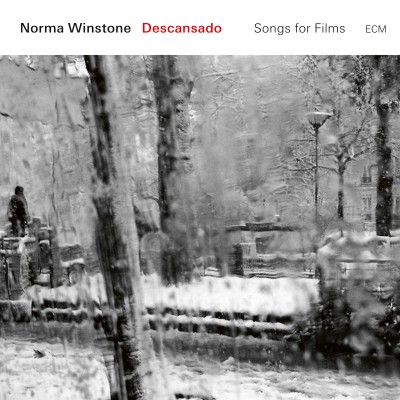
Norma Winstone, Descansado: Songs for Films (ECM)
The great English jazz singer and lyricist Norma Winstone delivers a masterclass in marrying words, melody, mood and storytelling on this, her fourth album with German saxophonist-clarinettist Klaus Gesing and Italian pianist Glauco Venier.
Almost fifty years on from her recording debut, Winstone marshals long experience and shrewd musical judgement to sound gracefully ageless, turning these songs by composers including Michel Legrand, Nino Rota, Ennio Morricone and even William Walton into miniature, self-contained films in their own right, her clear diction and warm, assured phrasing negating any need for visual images.
There’s a delicate beauty in the trio’s interpretation of Legrand’s His Eyes, Her Eyes as Gesing’s soprano saxophone caresses and soars away from Winstone’s voice and Venier’s gently probing piano and elsewhere, percussion, cello and piccolo cello increase the instrumentation with superb discretion.
Two songs at the album’s heart, both featuring Winstone’s wordless singing, provide gorgeous contrast - the sad, inconsolable Vivre Sa Vie and the carefree Lisbon Story - and while Winstone’s lyics to and singing of Morricone’s Malena produce a wonderfully weightless ballad, Rota’s attractively medieval-sounding What Is A Youth and the folksong-like Meryton Townhall emphasise the album’s breadth of stylistic reference.
From The Herald, March 10, 2018.
Scottish National Jazz Orchestra: Spirit of Light, St Mary’s Cathedral, Edinburgh
There’s a case for Christmas concerts staged in venerable Scottish architectural marvels being held in summertime. The room temperature for SNJO director, saxophonist Tommy Smith’s settings of poems reflecting the deep midwinter might have allowed the brilliant Norwegian percussionist Terje Isungset to perform one of his ice spectaculars.
In the circumstances the focus fell more on the performance than the work itself. The cathedral, with its Victorian gothic splendour and natural echo, became almost the musical and theatrical equivalent of football’s “twelfth man” as it offered a wonderfully effective dramatic and acoustic platform for Smith’s arrival, processing down the centre aisle, playing a beautiful folk-song-like air, with the ten-strong Cappella Nova choir in the right and left aisles adding their humming to the low drone of cathedral organ and arco double bass.
As the other vocal component, Kurt Elling intimated, this was a meditation rather than a jazz gig and SNJO itself was in unfamiliar form, being reduced to three trumpets, two trombones, double bass and drums, and enhanced by pedal harp, flute, bass clarinet, tuba, tympani and percussion.
Elling was superb, giving due weight to both spoken and sung verses and his oaky tone set against the limber voices of Cappella Nova sang out alongside the understated orchestrations, with Smith, as the other featured soloist, on tenor, choosing his phrases with great care, letting them breathe, sigh and expire in the atmosphere.
The words came from writers living and both long and not so long gone, from St Francis of Assissi to Liz Lochhead, who served as Scots Makar, or national poet, from 2011 to 2016, and the buoyant march of Robert Frost’s Stopping by Woods on a Snowy Evening performed the hit single role, playing in the internal jukebox all the way home.
From Jazzwise magazine, March 2018.
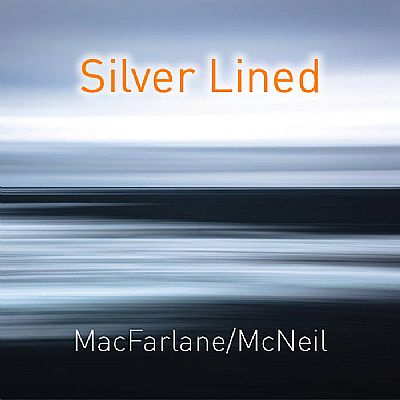
MacFarlane-McNeil, Silver Lined (Muzone)
The east coast of Scotland meets Seventh Avenue, Manhattan on this appealing first album from East Lothian-based guitarist Malcolm MacFarlane and Dundonian saxophonist Gordon McNeil’s new group.
McNeil has long had a fascination for the music that came out of the Brecker Brothers’ New York jazz club, Seventh Avenue South, and although the mind-set behind the album is Blue Note Records’1960s legacy, it’s the decades that followed immediately afterwards that the music suggests most. The Breckers, Pat Metheny and British jazz-funk heroes Morrisey-Mullen all spring to mind.
Easy on the ear melodies played in superb, sibling close sax-guitar unison combine with variously rugged, rhapsodic and conversational improvising from the leaders especially but also from Perth-born pianist Malcolm Edmonstone while drummer Tom Gordon adds poise and energetic fizz as required and bassist David Bowden lends a sure presence.
The addition of Iain Sandilands on vibes emphasises the relaxed, swinging Steps Ahead-like quality of Mendy’s Song and McNeil’s homage to saxophonist Bob Berg, whose life was tragically cut short at fifty-one by a motoring accident during a blizzard, captures its subject beautifully, its rumble-tumble creative urgency spurring MacFarlane, Edmonstone and McNeil himself into an eager, three-way trading choruses sequence.
From The Herald, February 10, 2018.
The Elusive Tree Ensemble, The Elusive Tree Ensemble (own label)
The Elusive Tree Ensemble is a product of Glasgow’s vibrant jazz scene where the well-paid gigs may be few but the musicians somehow thrive and develop, creating strong band identities which in this case includes Rachel Lightbody’s wordless vocals in a front line with alto and tenor saxophones and trumpet.
Their music combines both airy melodies and more urgent, urban grooves fuelled by Ben MacDonald’s superbly fluent guitar playing and Doug Hough’s crisp, assertive but never domineering drumming, with Paul Harrison, on organ, providing harmonic richness and bass pedal propulsion.
Alto saxophonist Adam Jackson’s For Folks Sake gets into the kind of swirling, reeling traditional-music inspired jazz that the Anglo-Scottish-Irish band Lammas used to purvey so successfully in the 1990s, with Lightbody impressively taking the role Christine Tobin used to fill in that band, and Jackson’s Amsterdam emphasises the ensemble’s compositional strength with staccato menace giving way to calmer tunefulness and expansive soloing from trumpeter Phil Cardwell.
It’s all immensely satisfying and while Cardwell, MacDonald and tenor saxophonist Andy Baker all contribute fine compositions, a particular highlight is their conversion of ill-starred Californian singer-songwriter Judee Sill’s The Kiss into a tenderly magnificent jazz ballad.
From The Herald, December 2, 2017
As his Edinburgh Jazz Festival concert in July confirmed, guitarist Mike Stern has made a remarkable recovery from the fall he suffered a year earlier in which he broke both his arms, a career-threatening trauma that he makes light of, with characteristic upbeatness, in this album’s title.
Stern also suffered nerve damage in his right hand but you would never know from his urgent, energetic picking on the frankly exciting, effervescent opening, title track. Surrounding himself with the cream of New York musicians, Stern has produced an album that’s up there with anything he’s delivered since he first made an international impact on Miles Davis’s The Man with the Horn album in 1981.
Davis’ later influence is felt in tracks such as Blueprint, where trumpeter Randy Brecker solos with fabulous commitment and musicality, but what particularly stands out is the uniformity of quality not just across a variety of styles, from the modern bebop of the aptly named Half Crazy, to the funk of Watchacallit to the lyricism of Emilia to the acoustic reflection of Gone, but also across the different line-ups Stern employs. Trip would be a great record under any circumstance but given its background, it’s heroic.
From The Herald, October 7, 2017
Top
Scottish National Jazz Orchestra: In the Spirit of Django, Queen’s Hall, Edinburgh
The Scottish National Jazz Orchestra ended its 2017 Queen’s Hall concert series with a concert full of fun and exuberance as well as virtuosity. Belgian guitarist Django Reinhardt’s music lends itself naturally to these qualities while also inviting the kind of soulful, sighing note reflection that featured soloist, guitar master Martin Taylor brought to probably Reinhardt’s most famous composition, Nuages, in a lovely arrangement by the orchestra’s alto saxophonist and clarinettist Martin Kershaw.
A good number of Reinhardt’s creations, along with tunes associated with him, were sequenced into medleys, mini suites in a way that allowed the music to change tempo and direction very effectively and brought out some startling, dynamic and ultra-smart ensemble work piloted by drummer Alyn Cosker, whose use of skulls and cowbell, harking back to the orchestral manoeuvres of the 1940s, was brilliantly and often comically theatrical without cheapening the impact.
Taylor was flanked by the marvellous Chris Garrick on violin and Karen Street on accordion in a side unit that could operate both independently of and beautifully and subtly in sync with the horns. If their playing on Taylor’s own Musette for a Magpie, with its French bar atmosphere, was bright and alive, then the way they swapped phrases on the brisk Django’s Rag was postively, in the favourite word of approval of another guitar hero, the recently departed Allan Holdsworth, gazeuse.
The bebopping Impromptu fizzed too and in contrast, Taylor and Street duetted with terrific sensitivity on Hymn a l’Amour before the concert finished with the SNJO horns processing around the auditorium while Taylor and orchestra director Tommy Smith co-led a cooking swing blues.
From The Herald, September 25, 2017
Zoe Rahman, Tolbooth, Stirling
With two young children under three needing entertained at home, Zoe Rahman says she doesn’t get to play piano to an audience of adults very often these days. Let’s hope these youngsters come to appreciate how privileged they are to enjoy such intimate recitals because listening to the Chichester-born Rahman getting to know the Tolbooth’s Estonia grand, especially when she delicately explored her Bengali roots, was a treat indeed.
Rahman is more usually found leading her trio, a situation, she joked, that lets her take off her cardigan much earlier during bass or drum solos, but aside from that convenience, she doesn’t need other musicians’ company. Her forceful left hand provides strong rhythm patterns and big chords at times reminiscent of McCoy Tyner driving the classic John Coltrane Quartet and she seems able to inspire a flow of improvised ideas within herself, building her ‘solos’ with a conversational logic where she asks and answers questions melodically.
Her choice of material was both refreshingly diverse and easily familiar but still featuring her own take and pacing on standards including Duke Ellington’s The Single Petal of a Rose and Thelonious Monk’s Ruby My Dear, which was delivered as a brief but sincere parting shot.
There’s a lot of joyfulness and wit in her playing, the latter quality coming through notably as she dampened the strings on Jessica Williams’ soul-jazz flavoured The Sheikh and stretched the phrasing to her own will on These Foolish Things, and she balances stormy vigour, as on her own The Epicentre, with a marvellously poetic touch on pieces selected from Bengali polymath Rabindranath Tagore and her dad’s favourite music from his days in Dhaka.
From The Herald, September 25, 2017
Stanley Clarke Group, St Luke’s, Glasgow
It was a night for acknowledging the gone but not forgotten. Charles Mingus was among them, as were – briefly – Miles Davis and John Coltrane, then more substantially the great George Duke, and following some entirely musical hooliganism down by the tail-piece, so was Stanley Clarke’s bass bridge.
Clarke does rather give his instruments some punishment. His signature sounds on both bass guitar and double bass have always seemed, at least in part, a creation of improbable finger strength. Just before the mishap that led to his acoustic bass, restored and retuned, sitting waiting to be brought back into action, Clarke had being paying homage to his former project co-leader, Duke with the keyboard master’s Brazilian Love Affair.
Exuberance doesn’t begin to describe this samba-ing, life-affirming celebration as Clarke and his band – the outrageously gifted Beka Gochiasvili, here on piano, soulful keyboardist-vocalist Caleb McCampbell and volcanic drummer Mike Mitchell – smiled their way through solo after virtuosic solo.
Charles Mingus’s Good-bye Pork Pie Hat, its theme having been stated with real, string caressing feeling by Clarke on bass guitar, was taken on a similarly energetic, exciting odyssey and the flamenco-dancing No Mystery, with Clarke showing ridiculous upper-fingerboard facility on double bass, and Gochiasvili and McCampbell trading fiery piano and keyboard choruses, was only stopped from achieving complete physical lift-off by Clarke giving his bass one affectionate punch too many.
Back in his youth the now sixty-six year old Clarke was presented as a force-to-be by jazz legends including Horace Silver, Joe Henderson and Stan Getz. They were right and you wouldn’t bet against these phenomenal talents he had with him here following his example.
From The Herald, July 27, 2017
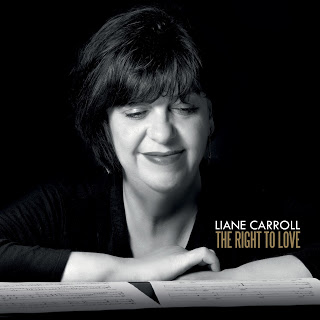
Liane Carroll, The Right to Love (Quiet Money)
There are few sounds more uplifting than Liane Carroll finding the joy – and sometimes the pain or the atmosphere – to be explored in negotiating a particular passage in a song. She does this again and again on this collection of songs that examine, celebrate and mourn love in all its glorious and not so glorious aspects.
Carroll’s stock-in-trade is believability. When she sings Tom Waits’ In the Neighbourhood she takes the listener down streets with tipped-over garbage pails and newspaper sleeping bags and on a down-home acoustic guitar and voice reading with an exuberant scatted solo, she really does have Georgia on her mind.
As well as being about love this album is about putting Carroll’s magnificently expressive voice in the right settings, and the arrangements are superb, with horns, rhythm section and Mark Jaimes’ many-sided guitar talent applied with unerring empathy. She phrases a little like Michael McDonald on the country soul-styled It’s A Fine Line but mostly she sounds like herself, zooming in on Carole King’s gospel essence on Goin’ Back, finding soulful layers of affectingly raw drama on Stevie Wonder’s Lately, and sounding charmingly, utterly bewitched on Hoagy Carmichael’s Skylark.
From The Herald, July 21, 2017
George Colligan, More Powerful (Whirlwind)
New Jersey-born pianist George Colligan was a familiar face in Scotland back when Henry’s Cellar Bar in Edinburgh hosted jazz almost every night of the week, and on the evidence of this album with his current quartet, it’s time he returned.
Composition was always as strong a part of Colligan’s armoury as onstage spontaneity and his writing here, especially on the trio tracks, continues to showcase a talent for clean, clear melodies that stay with the listener long after the album’s finished and develop into full-on dramas.
Add tenor and soprano saxophonist Nicole Glover to a group that comprises the steadfast and pliable Linda May Han Ho and the brilliantly effervescent Rudy Royston on drums alongside Colligan, and the drama increases exponentially in teethy quartet pieces such as More Powerful Than You Can Possibly Imagine and the initially bold, strong statement of Empty that grows more excitingly fractious with every minute.
Colligan’s playing is always supremely confident and unfailingly fluent, with ideas tumbling forth on the flying opener, Whiffle Ball, and he’s sufficiently generous as a bandleader to let Glover, on soprano, and Royston go toe to toe in a marvellous sax-drums throwdown on The Nash.
From The Herald, July 7, 2017
Ron Davis' SymphRONica, La Belle Angele, Edinburgh
SIXTY-plus years on from the first jazz-with-strings experiments, jazz and classical elements can still make an uneasy blend. Scotland’s own New Focus is one group that has successfully brought the two together and the Canadian pianist Ron Davis’ SymphRONica is another.
Davis’ ideas have some resemblance to another outfit that merges differing genres, Portland’s Pink Martini, not least in the way Latin American rhythms are given vivid emotional colour by the string arrangements but also in the light, almost throwaway manner that serious musical ability is juxtaposed with wit.
There may have been an element of putting the show together as we go here – only two of the other seven players onstage actually flew over with Davis – but the music has such a strong personality, and the musicians responded so surely to the aide memoirs from guitarist and musical director Kevin Barrett, that the results were entirely convincing.
The only drawback was that Davis is probably much more used to working with an acoustic piano. Even on an electric keyboard borrowed from the very promising and instrumentally accomplished young opening band, Manchester’s Artephis, however, Davis confirmed his chops.
His own compositions show a liking for characterful basslines, now taking big menacing steps, now waddling contentedly as the string quartet variously converses animatedly, conspires, sighs and improvises, and his arrangements and contrafacts lack nothing in imagination, drama and surprise. Rhythma-Ron, based on I Got Rhythm, featured the strings in brilliant duo and trio conflagrations and just to confirm Davis’ ear for detail and sense of fun, the Muppets theme was delivered as immaculately as the determinedly swinging The Way You Look Tonight.
From The Herald, July 4, 2018